Kuwait Knight
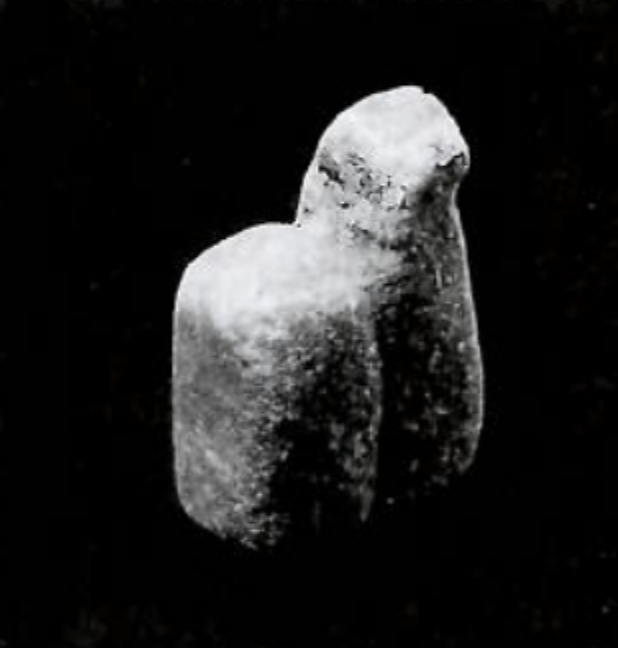
Kuwait Knight
This object is a 9th-century chess piece from Kuwait, described as a possible knight, camel, or horse. It is connected to Dar al-Athar al-Islamiyya and is unusual because it is made from stone, while many other Islamic chess pieces were made from ivory. The piece has a simple, abstract form. Instead of clearly showing a naturalistic horse or rider, it uses a more reduced shape. This makes the object visually powerful but also difficult to identify with complete certainty. The uncertainty surrounding this piece is one of the reasons it is valuable. Anna Contadini’s study of Islamic chess pieces, draughtsmen, and dice in the Ashmolean Museum explains that early Islamic chess pieces can be difficult to classify and date. One reason is that early chess treatises often described board positions but did not always provide detailed illustrations of the pieces themselves. Because of this, scholars must compare surviving objects by material, shape, style, and context. The Kuwait piece fits into that larger problem of interpretation. The possible identification of the piece as a knight, camel, or horse also reveals how chess changed as it moved. In modern European chess, the knight is represented by a horse’s head. But earlier chess traditions did not always use the same forms or names. In some Islamic and Persian contexts, pieces could be abstracted because of artistic conventions or because the symbolic function mattered more than realistic representation. This object therefore shows that chess pieces were not universal in appearance. They were adapted to local artistic languages. The Kuwait piece also helps connect chess to the Islamic world’s role in Silk Road exchange. The Islamic world was not just a bridge between East and West. It was a major center of intellectual, artistic, and commercial life. Chess fit into this world because it was associated with strategy, learning, and elite sociability. Gordon notes that chess masters from Persia and Central Asia came to courts in the Islamic world, where chess became part of broader intellectual culture. As an object, the Kuwait piece shows how a small gaming object can reveal large historical patterns. Its material, form, and uncertain identity all point to a world of translation. A piece that may have represented a horse, camel, or knight shows how chess was interpreted differently across regions. The game stayed recognizable, but its visual language changed. This makes the Kuwait piece an excellent example of Silk Road cultural exchange: it is not just an object that moved, but an object whose meaning shifted as chess entered new cultural settings.
Bibliography
- Contadini, Anna. “Islamic Ivory Chess Pieces, Draughtsmen and Dice in the Ashmolean Museum.” In Islamic Art in the Ashmolean Museum, edited by James W. Allan, 111-130. Oxford Studies in Islamic Art, Vol. 10. Oxford: Oxford University Press, 1995.
- Gordon, Stewart. “The Game of Kings.” Saudi Aramco World 60, no. 4 (July/August 2009): 18-23.