Ashmolean Ivory Rook
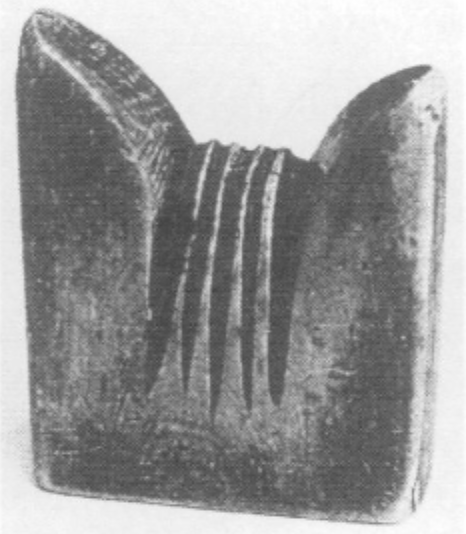
Ashmolean Ivory Rook
The Ashmolean ivory rook is a chess piece dated to the 7th-9th century CE. It is important because it helps explain how the rook changed meaning as chess moved across regions. Today, the rook is usually imagined as a castle tower. However, that was not always its meaning. Earlier traditions connected the piece to different ideas, including the Indian chariot. This object therefore shows how chess pieces could be reinterpreted as the game traveled. Remke Kruk’s article, “Of Rukhs and Rooks, Camels and Castles,” is especially important for this object. Kruk studies why the rook was called rukh in Arabic and Persian traditions and how the name became associated with different meanings. Kruk connects the rook’s original identity to the Indian chess chariot, or ratha, while also showing how the piece’s meaning changed in the medieval Middle East and Europe. This makes the rook one of the clearest examples of cultural translation in chess history. The rook’s changing identity matters because it shows that chess did not spread as a fixed system. As the game moved, players and artists had to make sense of pieces whose original meanings may not have fit their own world. A chariot might make sense in one cultural setting, while a castle or tower might make more sense in another. The result was not a simple mistake but a process of adaptation. Different cultures represented the same game piece through images and ideas familiar to them. The material of the Ashmolean rook is also significant. Ivory was a valuable material often associated with luxury objects. A chess piece made from ivory suggests that chess could belong to elite culture and refined craftsmanship. Contadini’s work on Islamic gaming objects in the Ashmolean Museum shows how scholars classify chessmen into style groups in order to place them in historical timelines. Her study also points out the difficulty of dating and identifying early pieces because surviving evidence is incomplete. In this exhibit, the Ashmolean ivory rook represents the transformation of meaning. The Libro de los Juegos page shows chess as a social activity, the Brest king shows archaeological evidence of chess in Europe, and the Kuwait piece shows the uncertainty of early Islamic chess forms. The rook brings these themes together by showing how one piece could carry multiple identities across time and space. It began with associations connected to one cultural world and later became something else. That transformation is exactly what makes chess such a huge part of the Silk Road.
Bibliography
- Contadini, Anna. “Islamic Ivory Chess Pieces, Draughtsmen and Dice in the Ashmolean Museum.” In Islamic Art in the Ashmolean Museum, edited by James W. Allan, 111-130. Oxford Studies in Islamic Art, Vol. 10. Oxford: Oxford University Press, 1995.
- Kruk, Remke. “Of Rukhs and Rooks, Camels and Castles.” Oriens 36 (2001): 288-298.